What Is Trading Psychology and Why Most Traders Never Master It

What is trading psychology and why does it matter more than any strategy you will ever find? Most traders spend years looking for the right answer in the wrong place.
They test indicators, study setups, backtest systems, and switch methods every few months when results do not improve.
And the whole time, the actual problem is sitting right there beneath the surface, completely invisible to them because nobody told them where to look.
Trading psychology is what determines whether a technically sound strategy produces consistent results or blows up an account.
It is the part of trading that lives between the signal and the execution, between the plan and what actually happens when real money is on the line and your emotions are running.
This post is not going to tell you to think positively or stay disciplined. You already know you should do those things.
What it is going to do is explain what trading psychology actually is, why it silently controls your results whether you are aware of it or not, and why so many traders spend years in the market without ever truly mastering it.
What Trading Psychology Actually Is (and What It Is Not)
Trading psychology is the study of how your mental and emotional state affects your decision making in the market.
That covers everything from how you enter a trade to how you manage it while it is open, how you respond when it goes against you, and how your thinking changes after a run of wins or losses.
It is not about being calm all the time. Plenty of traders think that mastering trading psychology means reaching some emotionless state where nothing affects them.
That is not how it works and chasing that idea is one of the reasons so many traders never actually make progress on this.
What it really means is understanding the relationship between what you feel and what you do. Not eliminating the feeling. Understanding it well enough that it stops making your decisions for you.
The market produces uncertainty constantly. Every open position is an unresolved situation with a financial consequence attached to it. Your brain is not wired to sit comfortably with that. It wants resolution.
It wants to act. And very often the action it pushes you toward, closing early, adding to a losing position, re-entering after a stop out, is the worst possible response to what the chart is actually showing.
That gap between what you know you should do and what you actually do under pressure. That is where trading psychology lives.
Why Most Traders Fail and It Has Nothing to Do With Strategy
There is a statistic that gets repeated across the trading industry. Around 70 to 80 percent of retail traders lose money consistently.
Most people who hear this blame the market, blame their broker, or blame the strategy they were using. Very few look at the one variable that was present in every single losing trade they ever took.
Themselves.
This is not an accusation. It is an observation that applies to almost every trader at some stage. The pattern is almost always the same. A trader learns a strategy that has genuine edge.
They test it, they understand the logic, and for a while they follow it. Then a losing streak arrives. And something changes.
They start second-guessing entries that their own rules say are valid. They exit winners early because the memory of recent losses is still fresh and they cannot bear to watch a profit disappear.
They move stop losses further away from price because they are not ready to take another loss. They start adding to losing positions because closing out and accepting the loss feels worse than the risk of holding on.
None of these decisions come from the strategy. They all come from the emotional state the trader is in at that moment. The strategy did not change. The market did not change. The trader changed.
Most traders fail not because they cannot read the market. They fail because they cannot manage their response to it.
Research consistently backs this up. Behavioural finance studies show that emotional decision making and psychological biases account for the majority of retail trading losses, far more than poor strategy selection.
The uncomfortable truth is that a trader with an average strategy and strong emotional discipline will outperform a trader with an excellent strategy and poor emotional control.
Every time. Over a long enough sample of trades the psychology always wins.
The Psychological Patterns That Repeat Across Every Market
Beyond the individual experience, one of the most striking things about trading psychology is that the same patterns appear regardless of what a trader is trading.
Whether it is forex, crypto, futures or equities, the emotional responses follow the same logic because they come from the same place. Human wiring.
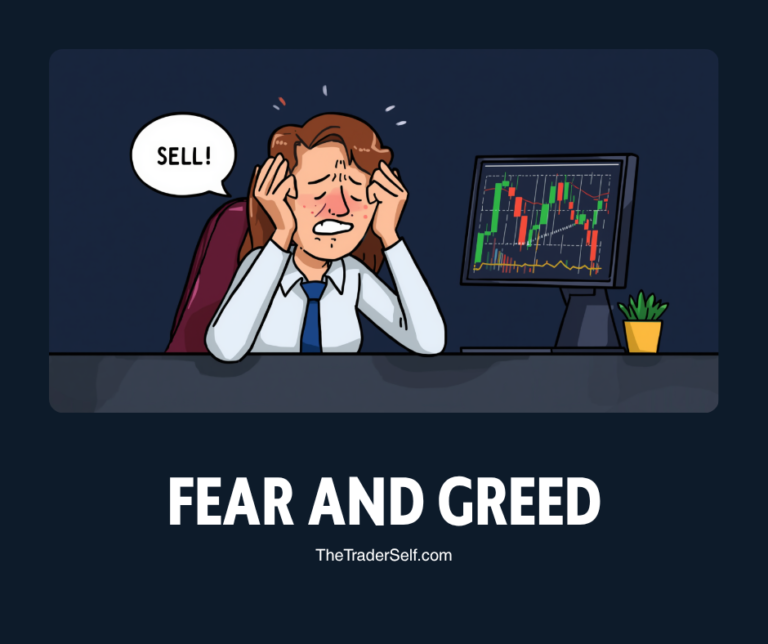
Fear of missing out pushes traders into entries they would never take if they were thinking clearly. The market moves sharply and the brain registers it as an opportunity disappearing.
The entry happens late, at the worst possible price, and when the move reverses the trader is immediately underwater.
Loss aversion causes traders to hold losing positions far longer than their plan allows because the pain of realising a loss feels more intense than the discomfort of watching it grow.
The stop loss exists for a reason. But when price approaches it, the mind starts building arguments for why this trade is different and why the stop should be moved.
Overconfidence after a winning streak is just as dangerous as fear after losses. A run of winning trades creates a feeling of certainty that is not justified by the data. Position sizes increase.
Rules get bent. The trader starts believing they have figured something out. Then one large, poorly managed loss erases weeks of gains.
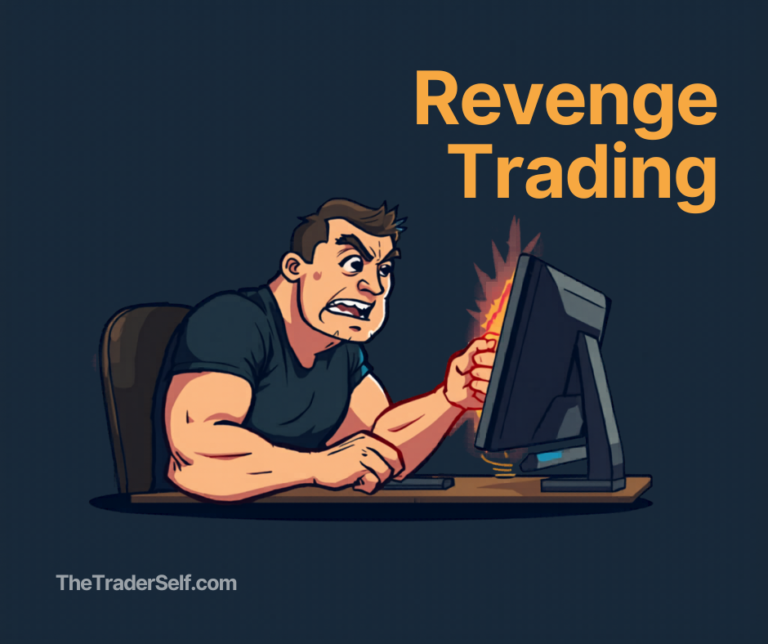
Revenge trading is the most immediately destructive pattern of all. A loss creates an emotional need to recover immediately. The next trade is not taken because the setup is valid. It is taken because the trader cannot sit with the feeling of being down.
These patterns are not personality flaws. They are predictable responses to an environment the human brain was never designed for.
The market rewards patience, accepts uncertainty as permanent, and produces random short-term outcomes from sound long-term processes. Almost nothing about everyday human psychology is naturally suited to that.
Understanding this is the beginning of actually changing it.
How Self-Awareness Becomes Your Biggest Trading Edge
As a result, most traders are looking for an edge in the market. A better entry signal. A smarter indicator. A cleaner setup. The traders who actually achieve consistency over time tend to find their edge somewhere else entirely.
They find it in themselves.
Self-awareness in trading means knowing your own psychological tendencies well enough to account for them before they cost you money. It means recognising when you are trading from a place of fear or greed rather than from your plan.
It means noticing the difference between a genuine setup and an emotional impulse dressed up as one.
This does not happen automatically. It requires observation over time. Specifically, it requires tracking not just what you traded but why you traded it and what you were feeling when you made the decision.
This is where a trading journal becomes less of a nice-to-have and more of a serious performance tool. Not a spreadsheet that records your P and L. A proper journal that captures the psychological state behind each trade.
What were you thinking before entry. How did you feel while the trade was open. What made you exit when you did.
Tools like Edgewonk and TraderSync are built specifically for this purpose. They let you tag the emotional context of each trade and surface patterns in your behavior over time that you would never notice just by reviewing charts.
When you can see in your own data that your win rate drops significantly in the session after a losing day, that information changes how you approach those sessions permanently.
Self-awareness is not a soft skill in trading. It is a measurable, improvable variable that directly affects your bottom line.
Where to Start if You Want to Actually Work on This
The gap between knowing trading psychology matters and actually doing something about it is where most traders stay stuck for years. They read about it, they agree with it, and then they go back to looking for a better strategy.
The starting point is simpler than most people expect.
Begin with observation rather than change. Before you try to fix anything, spend two to four weeks just noticing your emotional state while you trade.
Before each session, write one sentence about how you are feeling and what your mental state is coming in. After each trade, write one sentence about why you actually took it. Not why your strategy says you should have taken it. Why you actually did.
That small habit will show you more about your trading psychology in four weeks than most traders learn in years of reading about it. The patterns become visible. The triggers become identifiable.
And once you can see something clearly, you can start to work on it systematically rather than just hoping your discipline improves on its own.
The second step is building rules that protect you from your own worst tendencies. If you know you revenge trade after losses, a daily loss limit is not optional.
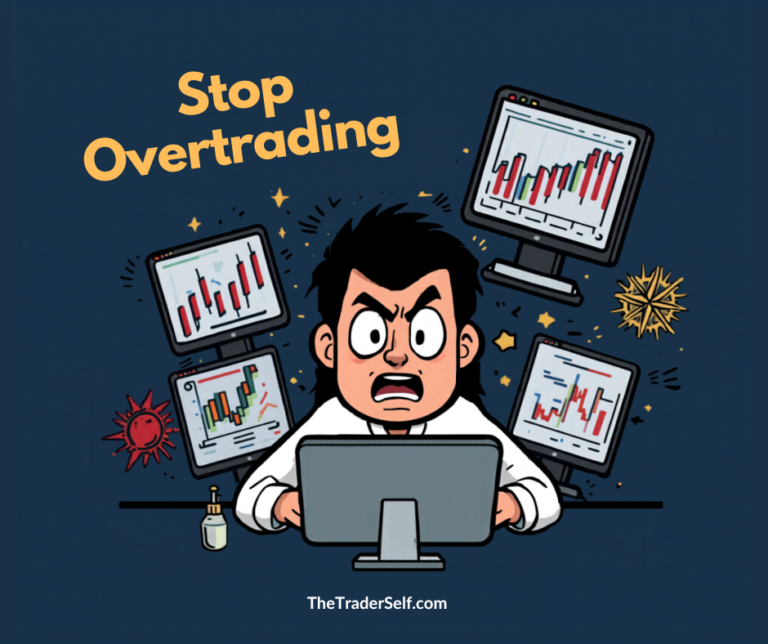
If you know you overtrade during slow sessions, a maximum trade count per day is not optional. Rules built around your specific psychological weaknesses are worth more than any entry signal.
Start with awareness. Build from there.
FAQ
What is trading psychology and why does it matter? Trading psychology refers to the mental and emotional factors that influence how a trader makes decisions.
It matters because even a technically sound strategy will produce poor results if the trader cannot execute it consistently under emotional pressure. Most trading losses trace back to psychological decisions rather than flawed analysis.
Can trading psychology really affect your profit and loss? Yes, directly and significantly. Studies of retail trader behavior consistently show that the same trader produces dramatically different results depending on their emotional state.
Overconfidence, fear, and revenge trading are among the most common and costly influences on real trading outcomes.
How long does it take to improve your trading psychology? There is no fixed timeline because it depends entirely on how consistently a trader works on it. Traders who journal regularly and build rules around their psychological weaknesses typically see measurable improvement within 60 to 90 days.
Traders who only think about it without changing their habits see very little change regardless of how much time passes.
What are the most common psychological mistakes traders make? The most common are revenge trading after a loss, closing winning trades too early out of fear, holding losing trades too long due to loss aversion, increasing position size after a winning streak, and entering trades impulsively based on FOMO rather than a valid setup.
Is trading psychology more important than strategy? In the short term a good strategy can mask poor psychology. Over a large enough sample of trades, psychology becomes the dominant variable.
Two traders using the same strategy will produce very different results if one manages their emotions well and the other does not. Strategy creates the opportunity. Psychology determines whether you can take it consistently.
Final Thoughts
Trading psychology is not a niche topic for advanced traders or a soft concept that does not affect real results. It is the foundation that everything else in trading is built on top of.
The market does not care how much you know. It does not reward preparation or punish ignorance in a neat, predictable way.
What it does, consistently, is expose how you behave when you are uncertain, when you are losing, and when you are winning. Those behavioral patterns, not your strategy, are what your long-term results are built on.
Most traders never master trading psychology not because it is too difficult but because they never genuinely start working on it. They treat it as background reading rather than the actual work.
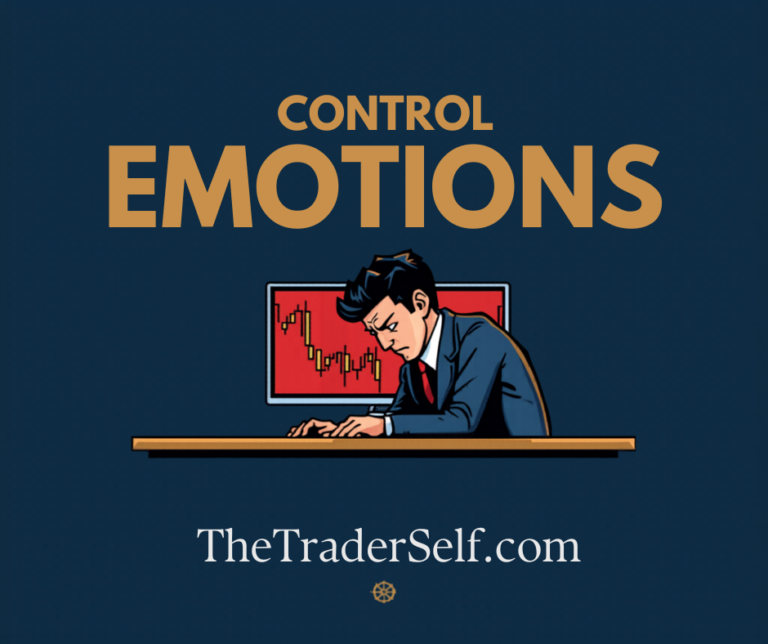
The posts on this blog go deeper into every aspect of what was introduced here. From controlling your emotions in real time in How to Control Emotions While Trading to breaking specific destructive patterns in How to Stop Revenge Trading.
If one thing in this post described something you have experienced in your own trading, that recognition is the starting point. Start there.
A trading journal is the most practical tool for building self-awareness as a trader. Edgewonk and TraderSync are both built specifically to track the psychological side of your trading, not just the numbers.